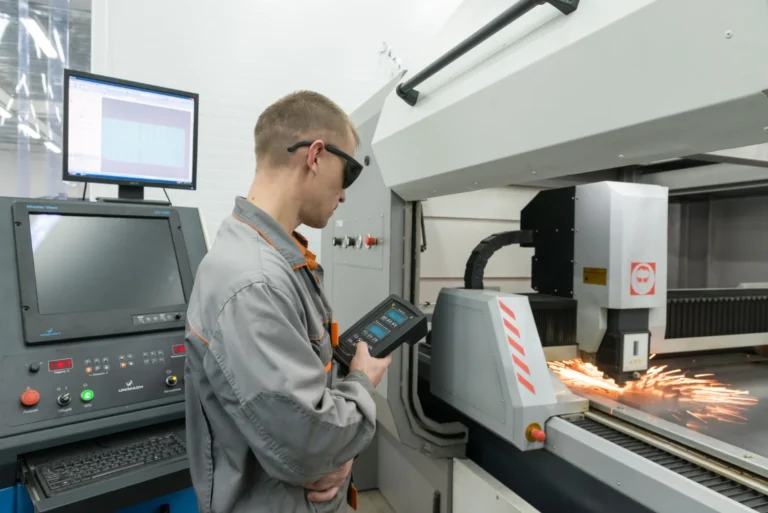


Laser scanning significantly boosts precision in manufacturing. By delivering high-resolution data, it reduces human error and quickly documents millions of data points.
Industries such as automotive, aerospace, construction, and healthcare are embracing laser scanning for creating digital twins, enhancing analysis, and crafting custom solutions.
Transitioning to laser scanning is an astute move, providing quicker, more detailed dimensional reports than conventional methods like Coordinate Measuring Machines (CMM).
Investing in laser scanning cuts labor costs and scrap rates, leading to impressive returns on investment through improved accuracy and efficiency.
The standard laser scanning process consists of preparation, setup, scanning, data processing, and reporting, enabling professionals to capture comprehensive details effectively.
AI and machine learning are reshaping inspection processes. By analyzing laser scanning data in real-time, they enhance reliability through predictive analytics.
Innovations in laser scanning technology are on the rise, promising greater accessibility for smaller businesses, integration with IoT, and advances in sustainability efforts across various industries.
How Laser Scanning Boosts Precision in Manufacturing
The Role of High-Resolution Data in Quality Control
In the bustling manufacturing environment, precise measurements are essential. High-resolution data obtained from laser scanning not only enhances accuracy but also curtails human error. This technology enables manufacturers to gather millions of data points in just seconds, ensuring that even the smallest details are documented and scrutinized.
Quality control has historically relied on manual measurements and gauges. While these methods have their merits, they can introduce inconsistencies. Laser scanning empowers professionals to take data-driven decisions with a level of detail that surpasses manual techniques, transforming errors from a frequent occurrence into rare incidents.
Applications Across Various Industries: Beyond the Basics
Take a look at the automotive industry, where precision reigns supreme. Engineers leverage laser scanning to generate a digital twin of vehicle parts, allowing for performance analysis in simulated settings. And this isn’t limited to cars; the aerospace, architecture, and healthcare sectors also experience remarkable benefits.
- Aerospace: Inspecting aircraft components to meet strict weight and strength standards.
- Construction: Ensuring that building components fit together accurately, tackling potential issues ahead of time.
- Healthcare: Crafting custom prosthetics with unmatched precision for improved patient outcomes.
According to experts, these industries have moved beyond traditional inspection methods. They are boldly embracing a future defined by high-precision measurements that consistently outshine older techniques.
Comparing Traditional Inspection Methods with Laser Scanning
Why Businesses Are Making the Shift to Modern Techniques
The transition to laser scanning isn’t a whim; it’s a calculated choice. Recognizing that old-school methods fall short in a competitive landscape, businesses are making a change. Consider that laser scanning provides detailed dimensional reports much faster than outdated techniques like CMM (Coordinate Measuring Machines). Efficiency and insight take priority.
“Companies that fail to adapt to new technologies will soon find themselves at a competitive disadvantage.”
Experts indicate that one significant factor driving the adoption of laser scanning is its flexibility. It can accurately inspect objects of varying sizes and complexities, ensuring that precision remains intact, regardless of scale. Additionally, this adaptability often leads to greater process improvements and substantial cost savings.
Cost-Benefit Analysis: When Does Laser Scanning Make Financial Sense?
Initially, the thought of investing in laser scanning can seem daunting. Yet, the return on investment can be substantial. Numerous companies witness major savings in labor costs and reduced scrap rates due to heightened accuracy.
- Reduced Labor Time: Quicker inspections result in faster turnaround times.
- Minimized Scrap Rates: Accurate measurements help curb defects.
- Enhanced Workflow: Data sharing and analysis become seamless, maximizing productivity.
Understanding the financial ramifications can lead firms to standardize laser scanning as a routine procedure. Delaying this adoption can mean missing out on cost benefits that foster long-term growth.
What to Expect During the Laser Scanning Process
Step-by-Step Breakdown of a Typical Inspection Project
Embarking on a laser scanning dimensional inspection project might feel overwhelming initially. However, those who familiarize themselves with the steps quickly realize the process is quite manageable. Typically, it unfolds in these stages:
- Preparation: Define the objectives and gather necessary equipment.
- Setup: Position the laser scanner to maximize data capture.
- Scanning: Execute scans of the object, collecting expansive details.
- Data Processing: Analyze the scanned data to glean insights and identify discrepancies.
- Reporting: Produce detailed reports based on analyses for informed decision-making.
This structured approach allows professionals to navigate the complexities of laser scanning with confidence. Each step builds on the one before, ensuring all vital details are thoroughly covered.
How to Prepare Your Equipment for Optimal Results
Prior to engaging in scanning, taking steps to ensure equipment is set for success is crucial. Proper prep can greatly affect data quality. Consider these pointers:
- Calibration: Verify that all equipment is calibrated correctly to ensure accuracy.
- Environment: Evaluate lighting conditions; both excess and lack can skew results.
- Software: Keep scanning software up-to-date for optimal functionality and features.
By addressing these elements early on, professionals can significantly reduce risks and greatly enhance the effectiveness of the scanning process.
Future Trends in Laser Scanning Technology
The Impact of AI and Machine Learning on Inspection Processes
AI and machine learning are not just changing manufacturing; they’re revolutionizing the inspection landscape entirely. Machine learning algorithms sift through vast amounts of data from laser scans, unearthing anomalies and deviations on their own. It’s a transformative approach.
Picture this: inspection results processed in real-time, enabling immediate corrective measures. This technology is no longer a concept; it’s already influencing how inspections unfold across various sectors.
“The future of inspections is predictive analytics, powered by AI.”
Further analysis reveals that with machine learning, previously unnoticed patterns can emerge. Such advancements lead to enhanced reliability and trust in inspection outcomes, unlocking the full potential of laser scanning dimensional inspection.
What Industry Leaders Are Saying About Emerging Innovations
Leaders in the industry express excitement regarding the trajectory of laser scanning technology. In many discussions, experts underscore how these advancements can streamline workflows, elevate product quality, and ultimately enhance customer experiences. Innovations in scanning technology promise to redefine operational effectiveness.
- Increased Accessibility: Latest developments allow even smaller businesses to access advanced scanning techniques.
- Integration with IoT: Smart devices will soon integrate with scanning technology for improved diagnostics.
- Sustainability: Insights gathered from precise measurements could lead to the development of eco-friendly materials and methods.
As these discussions continue, it’s evident that the future harbors transformative changes in inspection practices. Businesses that adapt will secure a distinct competitive advantage.
FAQ
How does laser scanning compare to traditional manual measurement techniques?
Laser scanning stands out for its unmatched precision, swiftly capturing extensive data accurately compared to manual methods. Traditional techniques often introduce errors and inconsistencies, whereas laser scanning ensures reliable data that supports superior decision-making.
What types of equipment are typically used in laser scanning?
Various laser scanning devices are employed, including terrestrial scanners, handheld scanners, and drones equipped with laser systems. Each type caters to different requirements, providing flexibility according to project needs and the environments involved.
Can laser scanning be integrated with existing manufacturing processes easily?
Integration is typically straightforward. Many businesses discover that laser scanning complements their current manufacturing operations well. With the right training, this technology not only boosts productivity but also strengthens existing quality control measures without necessitating major overhauls.
What training is required for personnel to operate laser scanning equipment?
While a basic understanding of technical equipment is advantageous, specialized training for specific laser scanning devices and associated software is key. This training usually covers operational procedures, data processing, and best practices to ensure accurate results.
How long does a typical laser scanning inspection project take to complete?
The timeframe largely hinges on the project’s complexity and size. However, laser scanning significantly trims inspection duration compared to traditional techniques. Many projects can wrap up in a few hours, producing results that prompt quick decision-making.
Are there any industries where laser scanning is particularly advantageous?
Indeed, sectors like aerospace, automotive, construction, and healthcare enjoy substantial benefits. In these fields, precision is paramount, and laser scanning’s high-resolution data drives innovations that directly affect product quality and safety.
What should businesses consider before investing in laser scanning technology?
It’s prudent for businesses to assess potential returns on investment, including savings from reduced labor and scrap rates. Evaluating existing workflows and considering how precision data might elevate operations will guide the decision-making process.
How do emerging technologies like AI further influence laser scanning capabilities?
AI enhances laser scanning by automating data analysis, uncovering patterns, and predicting anomalies. This advancement allows businesses to respond in real-time, thereby increasing inspection reliability and offering a depth of insight that manual analysis simply can’t match.
Useful Resources
- National Institute of Standards and Technology (NIST)
- American Society of Mechanical Engineers (ASME)
- ASTM International
- British Standards Institution (BSI)
- SAE International
- Association for Advancing Automation
- International Organization for Standardization (ISO)
- Institute of Industrial and Systems Engineers (IISE)
- World Wide Web Consortium (W3C) – Standards for technology integration